
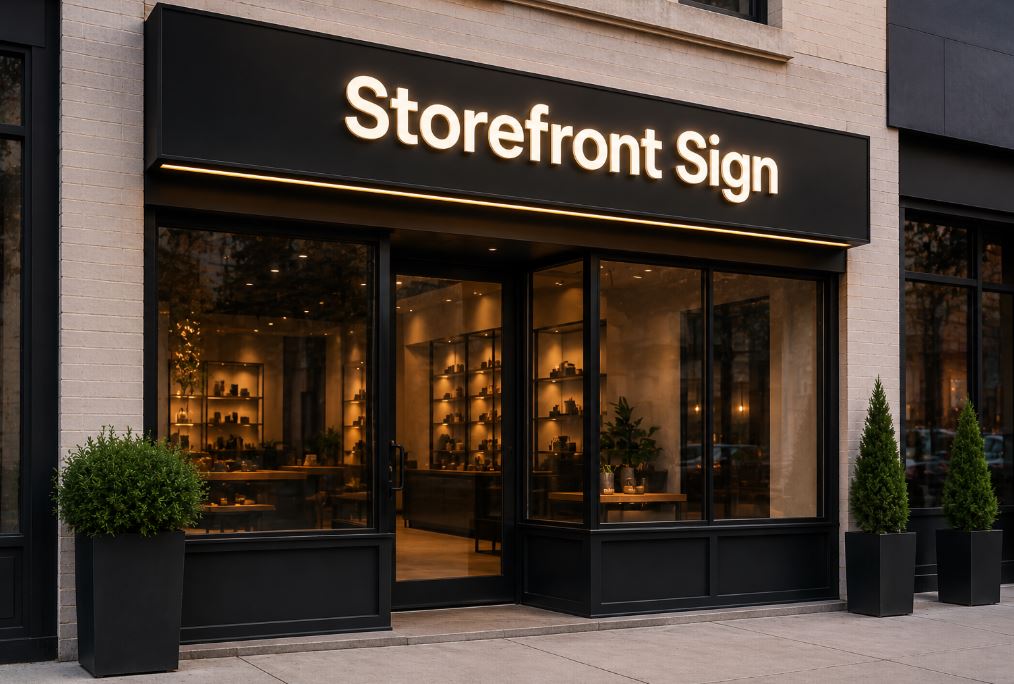
Your storefront sign is often the first thing potential customers notice about your business. While many business owners focus on marketing, websites, and social media, they sometimes overlook the condition and effectiveness of the sign displayed outside their building every day.
A storefront sign isn’t designed to last forever. Weather exposure, changing branding, fading materials, and evolving customer expectations can all reduce a sign’s effectiveness over time.
If you’ve been wondering whether it’s time to replace your storefront sign, there are several indicators worth considering.
Why Storefront Signs Matter More Than Many Businesses Realize
A storefront sign does much more than display your company name. An effective sign can:
- Increase local visibility
- Help customers find your location
- Reinforce brand recognition
- Create a professional first impression
- Support walk-in traffic
- Differentiate your business from competitors
When signage becomes outdated or difficult to see, these benefits begin to decline.
Sign #1: Your Sign Is Faded, Cracked, or Damaged
Missouri weather can be hard on exterior signage. Sun exposure, rain, snow, wind, and temperature fluctuations gradually affect sign materials.
Common signs of deterioration include:
- Faded colors
- Peeling graphics
- Cracked surfaces
- Rusted hardware
- Warped panels
- Water damage
- Missing letters
While minor issues can sometimes be repaired, extensive wear often signals that replacement is the better long-term investment.
A damaged sign may unintentionally communicate that a business is neglected or outdated.
Sign #2: Your Branding Has Changed
Many businesses update their branding over time. Examples include:
- New logos
- Updated color schemes
- New business names
- Revised messaging
- Expanded services
When your storefront sign no longer matches your website, social media profiles, vehicles, business cards, or marketing materials, customers may experience confusion.
Consistent branding helps create trust and improves recognition across every customer interaction.
If your visual identity has evolved, your signage should reflect those changes.
Sign #3: Customers Frequently Miss Your Location
One of the clearest indicators that a sign is no longer performing effectively is when customers struggle to find your business.
You may hear comments such as:
- “I drove right past it.”
- “I couldn’t see the sign from the road.”
- “I wasn’t sure which building was yours.”
These situations often suggest visibility issues rather than location issues. Common causes include:
- Small lettering
- Poor color contrast
- Obstructed views
- Inadequate lighting
- Aging materials
- Sign placement challenges
Improving visibility can help businesses capture attention from potential customers who pass by every day.
Sign #4: Your Sign Looks Outdated Compared to Nearby Businesses
Customer expectations change over time.
Modern businesses increasingly invest in professional branding, updated storefronts, and attractive signage systems.
If neighboring businesses have recently upgraded their appearance while your sign remains unchanged for many years, your location may appear less competitive.
This doesn’t necessarily mean following every design trend. Instead, it means ensuring your sign reflects the quality and professionalism of your business today.
Sign #5: Your Business Has Expanded Its Services
Many companies grow beyond the services they originally offered. For example:
- A print shop may begin offering graphic design services.
- A contractor may expand into additional trades.
- A retailer may add new product categories.
If your current sign no longer accurately represents your business, potential customers may never realize what you offer.
Updated signage can help communicate your expanded capabilities more effectively.
Sign #6: Your Sign Is Difficult to Read
Readability is one of the most overlooked aspects of sign performance. Even attractive signs can fail if customers cannot quickly understand the message.
Common readability issues include:
- Decorative fonts
- Excessive text
- Poor spacing
- Low contrast colors
- Small lettering
- Visual clutter
People often have only a few seconds to notice and process a sign while driving or walking past.
Simple, clear designs generally perform better than complicated layouts.
Sign #7: Your Existing Sign No Longer Reflects Your Business Quality
Business owners often invest heavily in customer service, equipment, facilities, and employee training.
However, if the exterior sign still looks old or neglected, customers may form inaccurate assumptions before they even enter the building.
Your signage should support the professional image you’ve worked hard to build.
A modern, well-maintained sign can help align customer expectations with the quality of your products and services.
How Long Do Storefront Signs Typically Last?
The lifespan of a storefront sign depends on several factors, including:
- Material quality
- Manufacturing methods
- Installation quality
- Local weather conditions
- Maintenance practices
While some signs can last many years, appearance often begins declining before structural failure occurs.
For many businesses, replacement decisions are driven by branding, visibility, and customer perception rather than complete sign failure.
Should You Repair or Replace Your Existing Sign?
In some cases, repairs may be sufficient. Repairs often make sense when:
- Damage is minor
- Branding remains current
- Visibility is still effective
- Structural components remain sound
Replacement is often the better option when:
- Multiple issues exist
- Branding has changed
- Visibility is poor
- Materials are significantly aged
- Business goals have evolved
Evaluating both short-term and long-term costs can help determine the most practical solution.
Questions to Ask Before Replacing Your Storefront Sign
Before investing in new signage, consider:
- Is the sign easy to see from the road?
- Does it match our current branding?
- Is it attracting attention effectively?
- Does it communicate our business clearly?
- Is the condition affecting customer perception?
- Are customers finding us easily?
Answering these questions can help identify whether a sign upgrade would provide meaningful value.
The Business Impact of Updated Signage
Replacing an outdated storefront sign is not simply an aesthetic improvement. Updated signage can contribute to:
- Stronger brand visibility
- Better customer recognition
- Improved first impressions
- Increased location awareness
- Enhanced professional image
- Greater consistency across marketing channels
For many businesses, signage remains one of the few marketing investments that works continuously every day without ongoing advertising costs.
Final Thoughts
A storefront sign should help your business get noticed, communicate professionalism, and support long-term brand growth. If your current sign is faded, difficult to read, inconsistent with your branding, or no longer reflects the quality of your business, it may be time to consider an upgrade.
For businesses throughout St. Louis County, St. Charles County, Florissant, O’Fallon, and surrounding communities, investing in updated storefront signage can improve visibility, strengthen brand recognition, and create a stronger first impression for potential customers.
Looking to upgrade your storefront sign? Mid North Visuals designs and produces custom business signage that helps local businesses create a more professional and visible presence.
GET IN TOUCH
Have you any questions, please contact us